
The Complete Guide to Electric Car Ownership in the UK (2026)
Key takeaways
- Home-charging EV drivers typically save £1,000–£1,500 a year vs petrol — but public-charging-only drivers may save little or nothing
- Since April 2025, EVs pay standard road tax (£195/year) — the old zero-rate exemption has ended
- The London Congestion Charge EV exemption also ended in December 2025 — EVs now pay the standard rate there too
- Salary sacrifice EV schemes remain genuinely tax-advantaged, unlike petrol/diesel schemes, due to a specific HMRC carve-out
- Rapid charging past 80% takes disproportionately long — planning around this single fact transforms the road-trip experience
- Most modern EV batteries retain 80%+ capacity after 100,000 miles — degradation is a real but usually overstated concern
The EV ownership conversation has changed a lot in the last 18 months — several tax advantages that used to make the decision straightforward have quietly ended, while the core running-cost case for switching remains genuinely strong for a lot of drivers. This guide walks through the whole picture as it actually stands in 2026, not the outdated version still circulating in a lot of older EV content. At each stage, we've linked the specific calculator to work out your own numbers.
1Is an EV actually cheaper? Myth vs reality
The honest answer is: it depends almost entirely on how and where you charge, which is a less satisfying answer than most EV marketing gives you, but it's the accurate one.
A driver who charges primarily at home overnight, on a standard or EV-specific tariff, genuinely does save a significant amount on fuel compared to petrol — often £1,000–£1,500 a year at typical mileage. A driver who relies heavily on public rapid chargers, particularly motorway ultra-rapid chargers, can find themselves paying more per mile than petrol in some cases. The EV cost advantage is real, but it's conditional, not universal.
⚡ Use the EV vs Petrol Calculator →The single question that matters most before deciding "is an EV cheaper for me?" isn't the car — it's "can I charge at home?" That one factor affects the answer more than almost anything else.
2Home vs public charging — the real cost per mile
The gap between the cheapest and most expensive ways to charge an EV is enormous — far bigger than the equivalent gap in petrol prices between different filling stations. A home overnight tariff can cost a fraction of a motorway ultra-rapid charger for the exact same energy.
| Charging type | Cost per kWh | Cost per mile |
|---|---|---|
| Home — EV overnight tariff | 7–15p | 2–4p |
| Home — standard tariff | 24–27p | 6–7p |
| Public rapid charger (DC) | 45–65p | 11–16p |
| Motorway ultra-rapid charger | 65–85p | 16–21p |
Compare that against a typical petrol cost of 17–19p per mile, and the pattern becomes clear: home charging comfortably beats petrol, while relying entirely on the most expensive public chargers can erase most or all of the advantage.
⛽ Use the Fuel Cost Calculator to compare against petrol/diesel →For the full breakdown of EV running costs beyond just charging, see our companion guide: Electric Car Running Costs UK 2026.
3The April 2025 tax changes everyone still gets wrong
This is the single biggest source of outdated information still circulating about EV ownership. For years, electric vehicles paid zero road tax and zero London Congestion Charge — genuine, significant financial incentives that shaped a lot of people's understanding of EV running costs. Both of those exemptions have now ended.
Since April 2025: EVs registered on or after 1 April 2017 pay the standard £195/year VED, the same as petrol and diesel cars. EVs with an original list price over £40,000 also pay the £620/year luxury supplement in years 2–6, just like any other expensive car.
Since 25 December 2025: the London Congestion Charge's Cleaner Vehicle Discount for EVs has also ended. Electric vehicles now pay the standard daily rate in the zone, just like petrol and diesel cars.
If you're reading an article, forum post, or even your own memory of "EVs are tax-free" — that's no longer accurate, and hasn't been for over a year.
🏷️ Use the Road Tax Calculator → 🏙️ Use the Congestion Charge Calculator →
4Company car and salary sacrifice EV schemes
Despite the changes above, one major EV tax advantage remains fully intact: Benefit-in-Kind rates for electric company cars are still remarkably low — currently 3% for 2025/26, rising gradually to 5% by 2027/28 — compared to 15–37% for equivalent petrol and diesel cars. This is a genuine, substantial saving for anyone with access to a company car scheme.
🚘 Use the Company Car Tax (BIK) Calculator →Salary sacrifice EV schemes benefit from a similar carve-out. Since HMRC's 2017 Optional Remuneration Arrangement rules removed most salary sacrifice tax advantages for cars generally, ultra-low and zero-emission vehicles were specifically exempted — which is why salary sacrifice car schemes today are overwhelmingly EV-only, and why the saving is still genuinely worthwhile for anyone with access to one.
💷 Use the Salary Sacrifice EV Calculator →
5Charging time and road-trip planning
The single most useful thing to understand before a long EV journey isn't the charger's maximum power rating — it's that DC rapid charging slows down dramatically above roughly 80% state of charge, because the battery management system deliberately protects the battery at that point. Charging from 20% to 80% might take under an hour on a rapid charger; continuing on to 100% can add nearly as much time again for just the last 20%.
🔌 Use the EV Charging Time Calculator →This is exactly why experienced EV road-trippers plan multiple shorter stops to around 80%, rather than fewer stops charging all the way to 100% — it's faster overall across a long journey.
6Driving an EV in cities
As covered above, the Congestion Charge EV exemption has ended, so city driving costs for an EV now look much more like any other car's — plan for the standard daily rate if you're regularly driving into central London, rather than assuming a free pass. Outside London, Clean Air Zones and low emission zones in other UK cities have their own separate rules, which vary by city and are worth checking directly for your specific route.
🏙️ Use the Congestion Charge Calculator →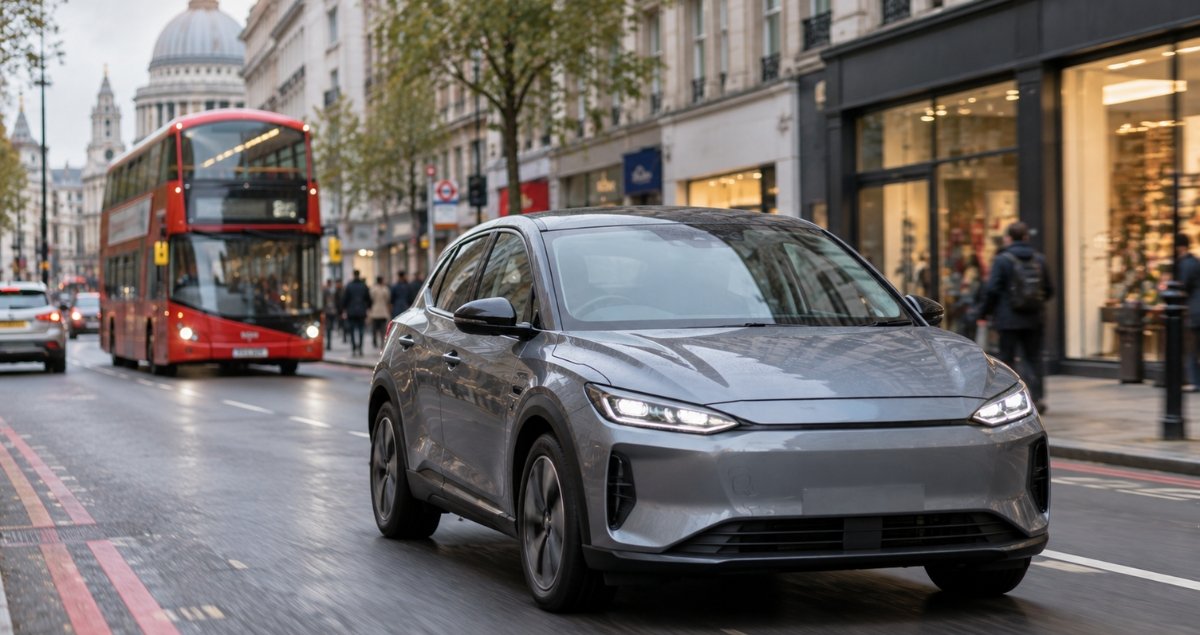
7Resale value and battery degradation — the honest picture
Battery degradation is the most commonly cited EV worry, and it's worth addressing honestly rather than dismissing it or overstating it. In practice, most modern EV batteries retain more than 80% of their original capacity after 100,000 miles, and are typically warrantied for 8 years or 100,000 miles by most manufacturers. For the vast majority of drivers within normal ownership periods, this isn't a practical day-to-day concern — but it's a real cost to be aware of for anyone planning to keep a car for a very long time or very high mileage.
Resale value patterns for EVs are genuinely mixed — some models hold value well, others depreciate faster as battery technology and range continue to improve model-on-model, making older EVs feel dated more quickly than an equivalent petrol car might.
📉 Use the Car Depreciation Calculator →8Who should — and shouldn't — switch
Rather than a blanket recommendation, here's a genuine, honest split based on everything above:
✅ EVs tend to make more sense if:
- You can charge reliably at home overnight
- You do consistent, moderate-to-high annual mileage
- You have access to a company car or salary sacrifice scheme
- Most of your driving is local or commuting, not long motorway trips
⚠️ EVs are a harder case if:
- You rely entirely on public charging (street parking, no driveway)
- Your annual mileage is low (savings take longer to offset the higher purchase price)
- You regularly do long motorway trips requiring frequent rapid charging
- You're considering a high-list-price EV that triggers the £620/year luxury VED supplement
Before you switch: checklist
- Confirmed whether home charging is realistically available to you
- Compared your actual mileage and driving pattern against the EV vs Petrol Calculator
- Checked the car's exact P11D value against current road tax and any luxury supplement
- Checked eligibility for a company car or salary sacrifice scheme, if available
- Planned realistically for charging time on any regular long journeys
- Budgeted for the Congestion Charge if you drive into central London regularly
- Read the manufacturer's battery warranty terms, not just marketing claims
Frequently asked questions
Is an electric car cheaper to run than petrol in the UK in 2026?
For drivers who charge primarily at home, yes — typically £1,000–£1,500 a year cheaper. Drivers who rely mainly on public rapid chargers may see little or no saving, and in some cases can pay more per mile than petrol.
Do electric cars still pay no road tax?
No. Since April 2025, EVs registered on or after 1 April 2017 pay the standard £195/year VED, the same as petrol and diesel cars. The previous zero-rate exemption has ended.
Do EVs still get free London Congestion Charge travel?
No. The Cleaner Vehicle Discount for EVs ended on 25 December 2025. Electric vehicles now pay the standard Congestion Charge rate.
Are salary sacrifice EV schemes still worth it?
Generally yes. Unlike petrol and diesel cars, ultra-low and zero-emission vehicles retain their salary sacrifice tax advantage under HMRC rules, making these schemes genuinely valuable where available.
How much does an EV battery degrade over time?
Most modern EV batteries retain more than 80% of their original capacity after 100,000 miles, and are typically warrantied for 8 years or 100,000 miles by most manufacturers. For most ownership periods, this isn't a major practical concern.
All tools referenced in this guide
Sources
- GOV.UK — Vehicle tax rate tables — VED rates from April 2025
- Transport for London — Congestion Charge, discounts and exemptions
- Ofgem — Energy Price Cap and unit rates 2026
- Zap-Map — UK public charging cost data 2026
- HMRC — Optional Remuneration Arrangements guidance