
Tyre Tread Depth Checker
Check whether your tyre tread is legal under UK law, and see the risk of driving on worn tyres.
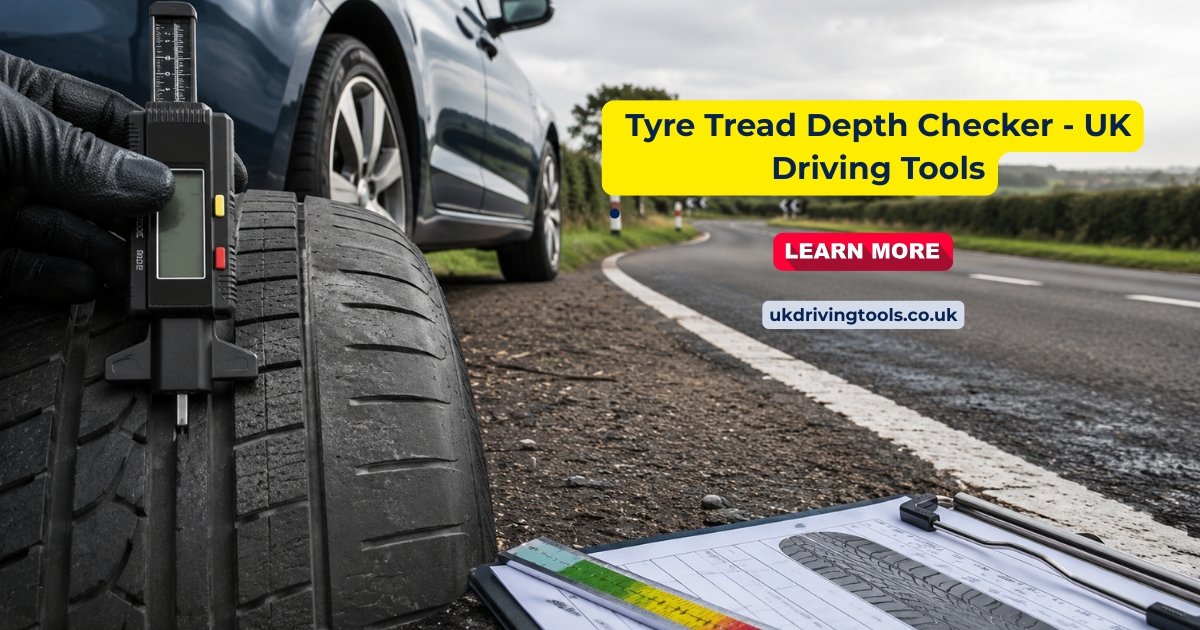
How does the tyre tread depth checker work?
Enter the tread depth reading for each of your four tyres in millimetres, and the checker compares each one against the UK legal minimum of 1.6mm. It flags each tyre as legal, marginal (legal but close to the limit), or illegal, and gives you an overall result based on your worst tyre — since a single illegal tyre makes the whole vehicle non-compliant, regardless of the other three.
3 worked examples
Example 1 — All four tyres well within the legal limit
Readings: 4.2mm, 4.0mm, 3.8mm, 3.9mm across the four tyres.
All four tyres pass comfortably — well above the 1.6mm minimum, with good margin before replacement is needed.
Example 2 — One tyre in the marginal zone
Readings: 3.5mm, 3.4mm, 1.8mm, 3.6mm — the rear left is close to the limit.
Technically legal (1.8mm is above 1.6mm), but the rear left is flagged as marginal. At this depth, wet-weather stopping distance is already measurably worse than on a new tyre — plan to replace it soon rather than waiting until it fails.
Example 3 — One illegal tyre
Readings: 3.0mm, 2.8mm, 1.4mm, 2.9mm — the rear left has worn below the legal minimum.
The vehicle is illegal to drive on public roads until that tyre is replaced or repaired, even though the other three tyres are fine. Each illegal tyre carries its own separate penalty risk — see the penalties section below.
Example 3 shows why checking all four tyres matters, not just the ones that look worn from a glance. Rear tyres in particular are easy to neglect since they're less visible day-to-day.
The legal minimum tread depth explained
UK law requires a minimum tread depth of 1.6mm, measured across the central three-quarters of the tyre's width, around its entire circumference. This applies to cars, and to light trailers — the requirement for motorcycles and larger vehicles differs slightly.
| Tread depth | Status | Guidance |
|---|---|---|
| 3mm and above | Good | Full performance, best wet-weather grip |
| 2mm – 2.9mm | Fine, monitor | Comfortably legal, wet grip starting to reduce |
| 1.6mm – 1.9mm | Legal but marginal | Meets the minimum, but replace soon |
| Below 1.6mm | Illegal | Do not drive — replace or repair immediately |
Penalties for illegal tyres
Driving on a tyre below the legal minimum carries serious penalties — and critically, the penalty applies per tyre, not per vehicle:
- Up to £2,500 fine and 3 penalty points for each illegal tyre — meaning a car with all four tyres illegal could theoretically face £10,000 in fines and 12 penalty points
- Automatic MOT failure if any tyre is below the legal minimum at the time of testing
- Potential insurance complications — driving with illegal tyres can affect a claim if you're involved in an accident
Why tread depth matters for stopping distance
Tread depth isn't just a legal box to tick — it has a measurable, significant effect on how quickly your car can stop, particularly in the wet. Worn tread can't clear water from under the tyre as effectively, increasing the risk of aquaplaning and substantially lengthening stopping distances even before reaching the illegal threshold.
Independent testing by tyre safety organisations has repeatedly shown that stopping distances in wet conditions increase noticeably once tread depth drops below around 3mm — well above the legal minimum. "Legal" and "performing like a new tyre" are not the same thing.
How to measure your own tread depth
You don't need special equipment for a basic check:
- The 20p test — insert a 20p coin into the main tread grooves. If the outer band of the coin is obscured by the tread, you're likely above the legal limit. If the band is visible, get the tyre checked professionally.
- A tread depth gauge — inexpensive and widely available, gives an exact millimetre reading rather than a rough pass/fail
- Check multiple points — inner, centre, and outer edge of each tyre, since wear is often uneven (a sign of alignment or pressure issues worth investigating separately)
What this checker can't tell you
Uneven wear across the tyre
This tool only takes one figure per tyre. If your tread depth varies significantly across the width (a common sign of incorrect tyre pressure or wheel alignment issues), a single measurement won't catch that a different part of the same tyre may already be illegal.
Other tyre faults
Cuts, bulges, embedded objects, and sidewall damage are all MOT failure points and safety risks independent of tread depth. This checker only assesses tread — a full visual inspection covers much more.
Whether your specific tyre needs replacing now
A "marginal" result is a guide, not a verdict — how soon you should replace a tyre in the 1.6–2.9mm range also depends on your typical driving conditions, mileage, and upcoming journeys (a long wet-weather motorway trip is a good reason to replace early even if technically still legal).
Common mistakes
Only checking the tyres that look worn
Rear tyres in particular are easy to overlook since they're less visible during a quick glance. All four need checking, not just the ones that catch your eye.
Measuring only the centre of the tyre
Wear isn't always even. A tyre can measure comfortably legal in the centre while being illegal at the edge — always check multiple points across the width.
Assuming "passed the MOT" means fine indefinitely
A tyre that passed its MOT with 1.7mm of tread will likely be illegal well before the next MOT is due, given typical wear rates. Don't treat an MOT pass as a green light to stop checking.
Not checking the spare
If your vehicle has a full-size spare rather than a space-saver, it's subject to the same legal tread requirement if it's fitted and used.
How we calculate
Per tyre: depth ≥ 3.0mm = Good · 2.0mm–2.9mm = Fine, monitor · 1.6mm–1.9mm = Legal but marginal · below 1.6mm = Illegal.
Overall result is determined by your worst single tyre — if any one tyre is illegal, the overall result is illegal, regardless of the other three.
🚗 See your full annual running costs
Tyre replacement is one of the running costs most drivers forget to budget for. See the full picture, including tyres, in our running cost calculator.
Use the Running Cost Calculator →Frequently asked questions
What is the legal minimum tyre tread depth in the UK?
1.6mm, measured across the central three-quarters of the tyre's width, around its entire circumference. This applies to cars and light trailers.
What happens if I'm caught driving on illegal tyres?
Up to a £2,500 fine and 3 penalty points per illegal tyre — meaning multiple illegal tyres can result in a much larger combined penalty. The vehicle will also automatically fail its MOT if tested with illegal tread.
How do I check my tyre tread depth without a gauge?
Insert a 20p coin into the tread grooves at several points across the tyre. If the outer band of the coin is obscured, you're likely above the legal limit; if it's visible, get the tyre checked professionally or measured with a proper gauge.
Does tread depth really affect stopping distance?
Yes, significantly, particularly in wet conditions. Independent testing shows stopping distances increase noticeably once tread drops below around 3mm — well before the legal minimum of 1.6mm — because worn tread can't clear water as effectively.
Do all four tyres need to be above the legal minimum?
Yes. Each tyre is assessed and penalised individually — having three good tyres doesn't exempt the fourth if it's below 1.6mm.
References & data sources
- GOV.UK — Tyres: the law. The official legal minimum tread depth requirement and how it's measured.
- DVSA — MOT inspection manual. Tyre-related MOT failure criteria, including tread depth and other tyre faults.
- TyreSafe. Independent stopping-distance research and the 20p tread depth test method.
This checker assesses tread depth only, based on the single figure entered per tyre. It cannot replace a full physical inspection of all four tyres for uneven wear, cuts, bulges, or other faults.