
The New Driver's Complete Guide: From Learning to Your First Car
Key takeaways
- Learning to drive costs the average UK learner £1,500–£1,700, before you've even bought a car
- New drivers face a stricter penalty point rule for their first 2 years — 6 points revokes the licence entirely, not just a ban
- PCP finance often looks cheaper monthly than HP, but you don't own the car until you pay the final balloon
- New driver insurance is the single biggest ongoing cost shock most first-time drivers don't budget for
- Running costs (tax, MOT, fuel, servicing) typically add £2,500–£3,500 a year on top of whatever you paid for the car
- A parking or speeding fine paid promptly can cost a fraction of what it costs if ignored — timing matters as much as the offence itself
Becoming a driver in the UK is really a series of separate decisions, each with its own costs and rules — and most guides only cover one piece of it in isolation. This one doesn't. We're walking through the entire journey in the order it actually happens: learning, passing, choosing a car, paying for it, insuring it, running it, and staying safe and legal once you're on the road. At each stage, we've built free calculators to help you work through the real numbers for your own situation — you'll find them linked as we go.
1Learning to drive and what it really costs
Before any of the bigger decisions — what car, how to pay for it, which insurer — there's the cost of getting your licence in the first place, and it's larger than most people expect going in.
The fixed costs are set by the DVSA and don't vary: a provisional licence costs £34 online, the theory test £23, and the practical test £62 on a weekday or £75 on an evening or weekend. None of that is negotiable. What genuinely varies — and what actually drives your total cost — is how many hours of professional tuition you need. The national average sits around 45 hours, but that's exactly that: an average, not a personal prediction. Some learners pass comfortably in 20–25 hours; others need considerably more.
Combining the fixed DVSA fees with a realistic number of lessons at your local instructor's rate gives a genuinely useful budget figure, rather than a vague guess.
🎓 Use the Cost of Learning to Drive Calculator →The single biggest lever on cost is combining professional lessons with supervised private practice in a properly insured car — this can cut your total spend dramatically, since lessons are by far the largest expense in the whole process.
2Passing your test and the rules that follow
Passing your practical test feels like the finish line, but it's actually the start of a stricter set of rules that apply specifically to new drivers, and catch out a genuinely large number of people who simply don't know they exist.
Under the New Drivers Act, if you get 6 or more penalty points within your first 2 years of passing, your licence isn't just endorsed — it's revoked entirely. You have to reapply for a provisional licence and pass both the theory and practical tests again, from scratch, as if you'd never passed at all. This is a dramatically harsher consequence than the same 6 points would carry for an experienced driver, and it's shockingly easy to reach — two moderate speeding offences can be enough.
This is the single most important thing for a new driver to understand about penalty points. It's not "get points, get a bit closer to a ban" the way it works for an experienced driver — for your first two years, 6 points means starting your entire driving qualification over again.
If you do pick up an offence, it's worth understanding exactly how many points it carries and how long it stays on your licence before deciding how to respond.
🔴 Use the Penalty Points Calculator →For a deeper dive into exactly how long points stay on your record and how they interact with insurance, see our full guide: How Long Do Penalty Points Last?
3Choosing your first car
The purchase price is only the headline number — the two things that actually determine how much a car costs you over the years you own it are depreciation and fuel/energy type, and both are easy to underestimate at the point of buying.
Depreciation is the largest single cost of car ownership for most drivers, yet it's the one almost nobody calculates before buying, simply because it's invisible day-to-day — there's no bill for it, so it's rarely budgeted for.
📉 Use the Car Depreciation Calculator →The other big decision is petrol, diesel, or electric. EVs genuinely can be cheaper to run, particularly if you can charge at home overnight — but the comparison depends heavily on your specific mileage and charging access, not a blanket answer that applies to everyone.
⚡ Use the EV vs Petrol Calculator →
4Paying for it — cash, PCP, or HP
Unless you're buying outright with cash, you'll be choosing between Hire Purchase (HP) and Personal Contract Purchase (PCP) — and the difference between them matters far more than most first-time buyers realise.
With HP, you're paying off the full price of the car plus interest, and you own it outright once the final payment clears. With PCP, your monthly payment only covers the car's estimated depreciation over the term, which is why it looks cheaper month-to-month — but you don't actually own the car at the end unless you pay a final "balloon" payment on top of everything you've already paid.
A lower PCP monthly payment isn't automatically the "cheaper" option — it's a different shape of the same cost, with a large lump sum deferred to the end. Compare total cost, not just the monthly figure, before deciding.
5Insurance — why it's expensive and how to reduce it
This is the cost that catches more new drivers off guard than any other single figure in this whole guide. Insurers price risk primarily using claims data, and new drivers — statistically, as a group — have a meaningfully higher accident rate than experienced ones, regardless of individual skill. That statistical reality, not anything about you personally, is what drives new driver premiums up.
There's no official calculator for this one, because insurance pricing is entirely individual — your age, postcode, car, and specific insurer all interact in ways no general tool could honestly predict. But there are genuine, well-established ways new drivers reduce the cost:
- Telematics ("black box") policies — insurers monitor your actual driving and can offer significantly better rates to demonstrably careful drivers, sometimes bringing new-driver premiums down substantially
- Choosing a lower insurance group car — smaller engines and cheaper-to-repair models generally cost less to insure, often by a meaningful margin
- Building a no-claims history as early as possible — even a single claim-free year makes a real difference to your next renewal
- Comparing at renewal, every year — renewal quotes are almost never the cheapest option; new-customer pricing from a different insurer usually beats it

6Keeping the car legal and running
Once you're driving, a set of recurring, non-negotiable costs kick in — road tax, MOT, fuel, and servicing — and together they typically add more to your annual spend than most new drivers initially expect.
| Cost category | Typical annual cost |
|---|---|
| Road tax (VED) | £195 |
| MOT (from year 3) | £30–£55 |
| Fuel (8,000 miles, petrol) | £1,200–£1,400 |
| Servicing & basic repairs | £250–£400 |
| Total (excl. insurance & depreciation) | ~£1,700–£2,200 |
Each of these has its own calculator if you want the exact figure for your specific car:
🏷️ Use the Road Tax Calculator → 🔧 Use the MOT Due Date Calculator → ⛽ Use the Fuel Cost Calculator → 🚗 Use the Car Running Cost Calculator (the full picture) →For the fully detailed national picture, see our companion guide: Average Cost to Run a Car in the UK (2026).
7Staying safe and avoiding costly mistakes
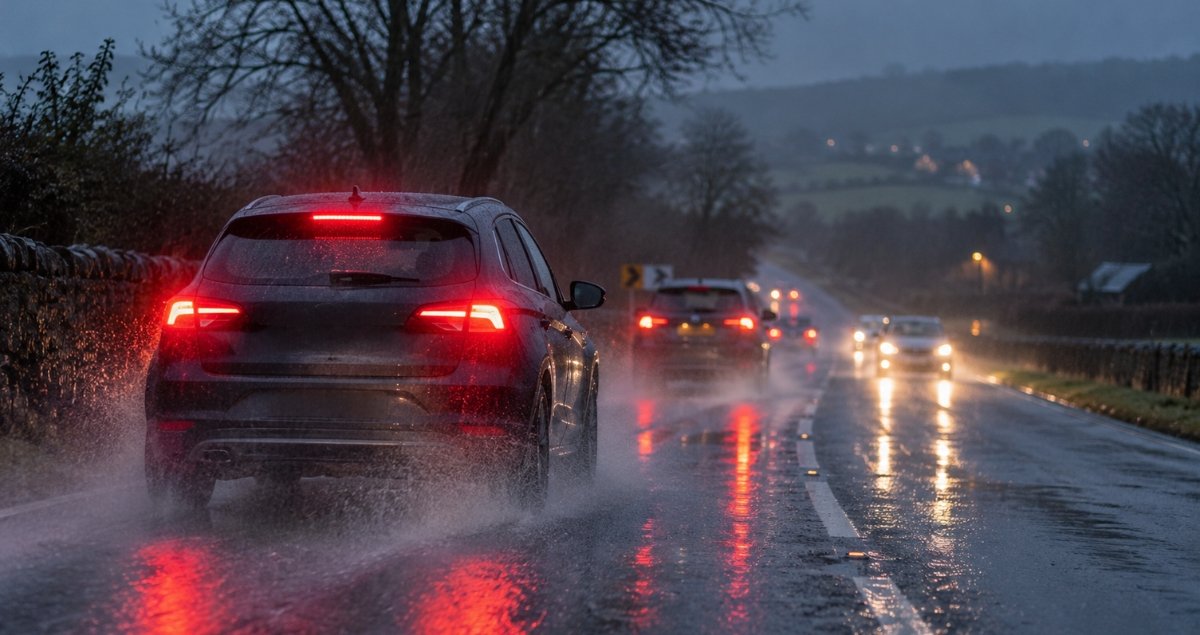
New drivers are statistically more likely to be involved in a collision in their first two years than at any other point in their driving life — not because of recklessness, but because judgement around genuinely difficult things like stopping distance and road conditions is something that's built through experience, not just the test.
One of the most underestimated facts among new drivers specifically: stopping distance increases dramatically with speed, not proportionally — it's a function of speed squared for the braking portion, which is why even a small increase in speed adds a disproportionate amount to how far your car travels before stopping.
🛑 Use the Stopping Distance Calculator →Tyre condition matters just as much, and it's one of the easiest things to genuinely forget to check as a new driver, since it's not part of the day-to-day driving experience the way fuel or dashboard warnings are.
🛞 Use the Tyre Tread Depth Checker →And if you do end up with a speeding or parking notice, understanding it properly — rather than panicking or ignoring it — genuinely changes the outcome. A speeding offence resolved via a speed awareness course, where eligible, avoids penalty points entirely; a parking fine paid within the discount window costs half of what it does if left. Both are covered in detail elsewhere on the site:
💷 Use the Speeding Fine Calculator → 🅿️ Use the Parking Fine (PCN) Calculator →For the full picture on speeding penalties specifically, see UK Speeding Fines: The Complete Guide and Speed Awareness Course vs Penalty Points.
8Driving in cities — congestion and clean air charges
If your first car takes you into or through central London regularly, there's a cost that has nothing to do with fuel, tax, or insurance: the Congestion Charge. It's set by Transport for London, not the DVLA, and it's easy for a new driver — particularly one who's only ever seen it mentioned in passing — to underestimate how quickly it adds up for a regular commute.
🏙️ Use the Congestion Charge Calculator →Your first-year checklist
- Provisional licence, theory pass, and practical test all completed and on file
- Aware of the New Drivers Act 6-point revocation rule for your first 2 years
- Insurance in place before driving away — never assume it's arranged automatically at purchase
- Road tax declared (even a £0 exempt declaration still requires action, if applicable)
- MOT date noted for year 3 onward, and diarised ahead of time
- Tyre tread depth checked at least monthly, more often in winter
- A realistic annual running cost budget in place — not just the cost of buying the car
- A plan for any future PCP balloon payment, if that's how the car is financed
Frequently asked questions
How much does it cost to become a driver in the UK from start to finish?
Learning to drive typically costs £1,500–£1,700 including lessons and test fees. On top of that, a first car's ongoing running costs (tax, MOT, fuel, servicing) typically add £1,700–£2,200 a year, before insurance — which for new drivers can be the single largest annual cost of all, and varies too much individually to state a single figure.
What happens if a new driver gets 6 penalty points?
Under the New Drivers Act, a driver within their first 2 years of passing who accumulates 6 or more penalty points has their licence revoked entirely, not just endorsed. They must reapply for a provisional licence and retake both the theory and practical tests from scratch.
Is PCP or HP better for a first car?
Neither is universally better — HP means higher monthly payments but full ownership at the end; PCP means lower monthly payments but a final balloon payment is needed to own the car outright. The right choice depends on whether you value lower monthly cost now or guaranteed ownership later.
Why is insurance so expensive for new drivers specifically?
Insurers price based on statistical risk, and new drivers as a group have a meaningfully higher accident rate than experienced drivers, regardless of individual skill. Telematics policies, a lower insurance group car, and building a no-claims history are the most effective ways to bring the cost down over time.
What's the biggest mistake new drivers make with running costs?
Budgeting only for the cost of buying the car, without accounting for depreciation, insurance, and ongoing running costs together. Depreciation in particular is easy to miss entirely, since it's not a bill you're ever sent — it's simply the difference between what you paid and what the car is worth later.
All tools referenced in this guide
Sources
- DVSA — Official theory and practical driving test fees
- GOV.UK — New drivers: your licence, and the 6-point revocation rule
- GOV.UK — Vehicle tax rate tables 2026
- RAC — RAC Report on Motoring — running cost data
- Financial Conduct Authority — Consumer credit and representative APR advertising rules