
The Complete Guide to Buying and Selling a Used Car in the UK
Key takeaways
- Vehicle tax has not transferred with the car since October 2014 — the buyer must tax it themselves from day one
- A used car's free MOT history check can reveal past mileage readings — a genuine way to spot potential clocking
- Buying a 1–3 year old car means someone else already absorbed the steepest part of the depreciation curve
- Vehicles built more than 40 years ago may qualify for tax and MOT exemption — but the rolling 1 April cutoff catches out more buyers than you'd expect
- A private plate must be formally retained or transferred through the DVLA — it doesn't happen automatically with a sale
- Checking for outstanding finance on a used car before buying privately is a genuinely important step many buyers skip
Buying or selling a used car involves a specific set of checks, paperwork, and rules that don't come up anywhere else in car ownership — and getting them wrong ranges from mildly annoying to genuinely expensive. This guide walks through the whole process from both sides, buyer and seller, with the relevant calculator linked at each stage.
1Checking a used car before you buy
The single most useful free check before buying any used car is its MOT history, available directly from GOV.UK using just the registration number. It shows every test result, advisory note, and — critically — the recorded mileage at each test, which is one of the most reliable ways to spot a car that's had its odometer tampered with ("clocking"), since a genuine mileage progression should climb steadily test to test, not jump backwards or plateau suspiciously.
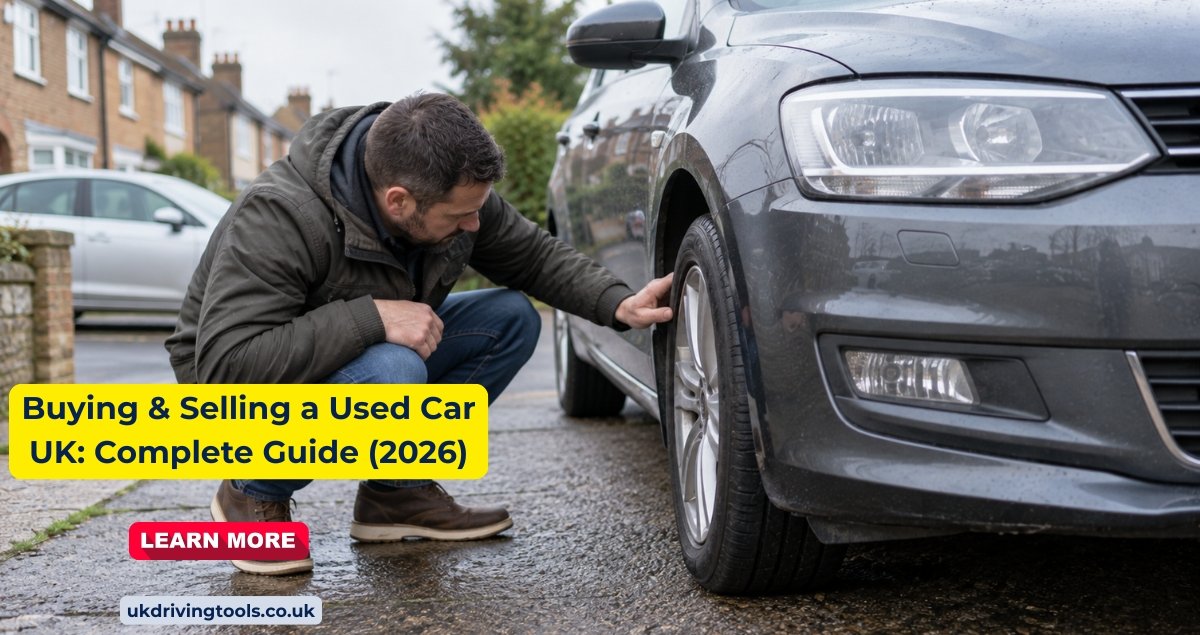
Physically, the tyres are one of the fastest things to check in person, and one of the easiest to overlook when you're focused on the engine and bodywork.
🛞 Use the Tyre Tread Depth Checker → 🔧 Use the MOT Due Date Calculator →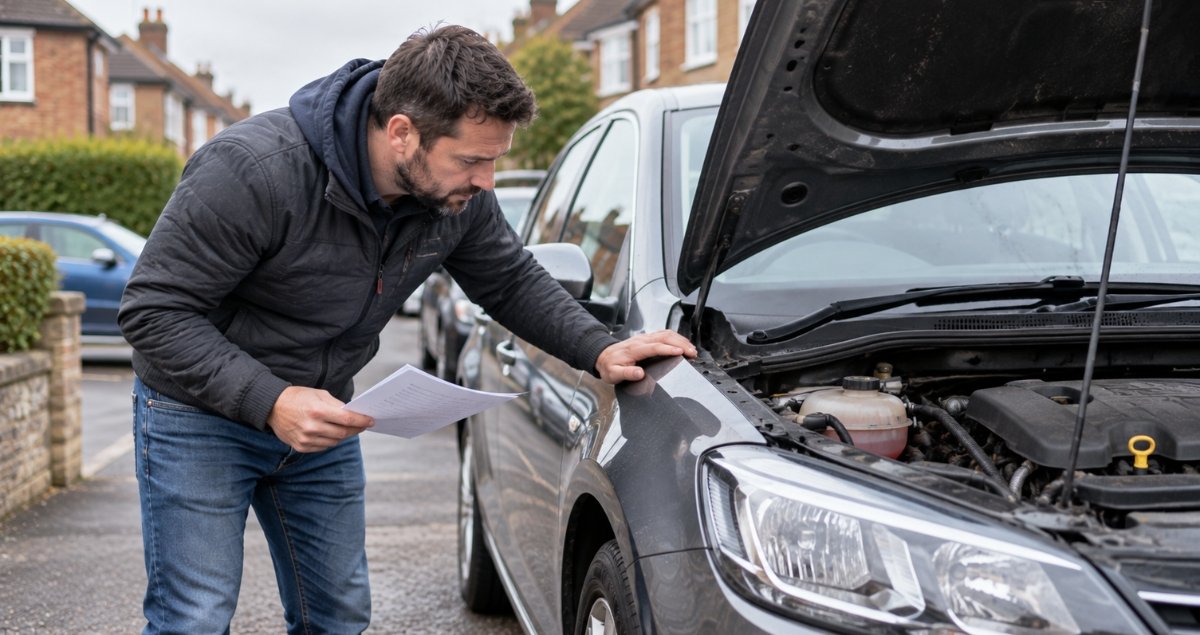
2Depreciation from the buyer's side
A new car typically loses 15–25% of its value in the first year alone, and around 50–60% over three years — which sounds like bad news until you flip it around from a used-car buyer's perspective. Buying a 1–3 year old car means the original owner absorbed the steepest, fastest part of that depreciation curve, and you're buying into a much flatter part of the curve going forward. This is exactly why the "nearly new" segment of the used market is often considered the genuine value sweet spot.
📉 Use the Car Depreciation Calculator →3Financing a used car
PCP and HP finance both remain available on used cars, though terms can differ from new-car finance — older or higher-mileage vehicles may come with a lower balloon (GFV) valuation on PCP, since the car's projected future value is naturally lower to begin with. The same core trade-off applies as with a new car: HP means full ownership at the end for a higher monthly payment; PCP means a lower monthly payment but a final balloon payment to actually own the car.
💳 Use the PCP & HP Car Finance Calculator →Always check for outstanding finance before buying privately. If the seller still owes money on the car through a previous finance agreement, buying it doesn't automatically clear that debt — a vehicle history/finance check service can flag this before you hand over any money, and it's a step genuinely worth the small cost involved.
4Road tax on a used car — the rule everyone gets wrong
This is the single most commonly misunderstood part of buying a used car: vehicle tax has not transferred with the car since October 2014. Whatever tax the previous owner had on the vehicle becomes void the moment ownership changes — the seller gets a refund for any full remaining months, and the buyer must tax the vehicle themselves, from the date of purchase, before driving it.
Driving a newly purchased used car home on the assumption that "it's already taxed" is a genuine, common mistake — and driving an untaxed vehicle is illegal, regardless of whether the previous owner's tax still shows time remaining.
5Buying a classic or older car
Vehicles built more than 40 years ago can qualify for a genuinely valuable exemption from both VED and the MOT test — but the rule is a rolling one, tied to 1 April each year, not the vehicle's exact 40th birthday. This catches out more buyers than you'd expect: a car can be genuinely over 40 years old and still not qualify yet, simply because the next 1 April cutoff hasn't arrived.
🚙 Use the Historic Vehicle Tax Exemption Checker →Even once exempt, both the tax and MOT exemptions still require an active annual declaration — the exemption removes the cost, not the requirement to tell the DVLA the vehicle's status every year.
6Number plates when buying or selling
If a seller wants to keep their private or personalised plate rather than letting it go with the car, that has to be done formally through the DVLA before or at the point of sale — it doesn't happen automatically. The plate is either retained on a document for future use, or transferred directly to another vehicle the seller already owns.
🔢 Use the Number Plate Personalisation Cost Calculator →For buyers, it's worth checking whether the registration shown on a car for sale is actually the original plate or a personalised one that might be removed by the seller before completion — worth clarifying explicitly as part of the sale, not assumed.
7The paperwork: transferring ownership
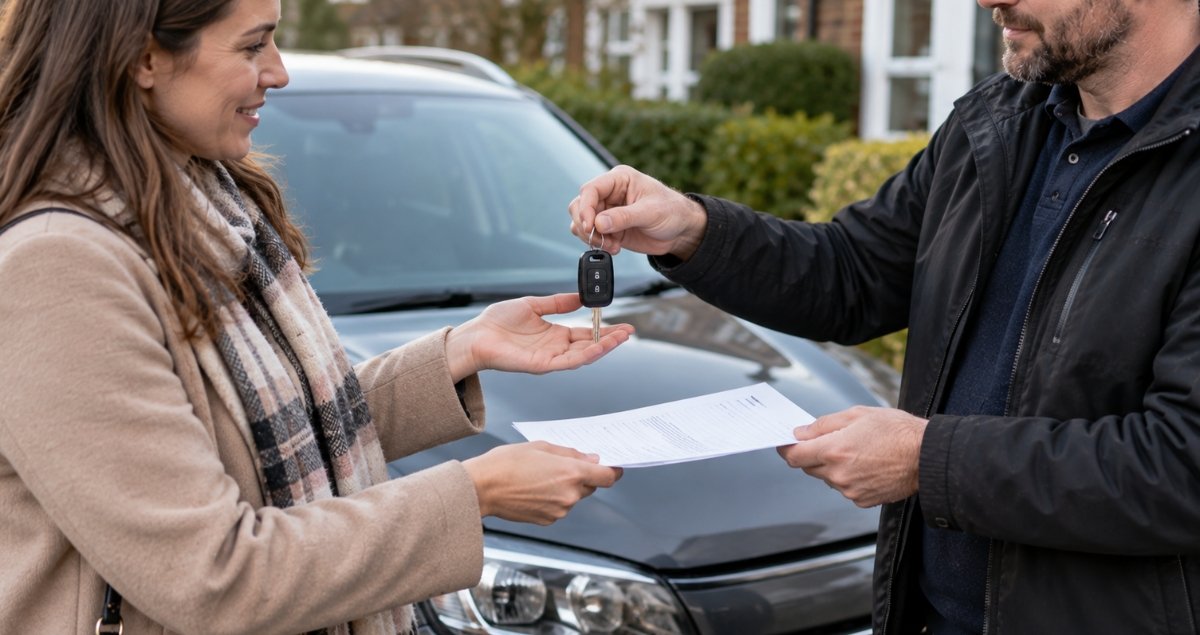
When a car changes hands, the seller completes the "new keeper" section of the V5C logbook and either hands the buyer the green new keeper slip (for immediate proof of ownership while the full V5C is reissued) or completes the transfer online. The DVLA needs to be informed of the change of keeper promptly — the seller remains legally associated with the vehicle, including for things like speeding camera notices, until this is done correctly.
- Selling: complete the relevant V5C section, keep the seller's own retained portion as proof of sale, and inform DVLA (online is fastest)
- Buying: check the V5C isn't reported stolen or altered, confirm the VIN/chassis number matches the document, and keep the green new keeper slip until the full V5C arrives in your name
8Common used car scams and red flags
- Cloned plates — a genuine vehicle's registration copied onto a different (often stolen) car; cross-check the VIN against the V5C and be wary if either looks altered or inconsistent
- Mileage clocking — cross-reference the MOT history mileage readings and service book stamps against the odometer; unexplained inconsistencies are a serious red flag
- Cash-only, no-paperwork deals — a legitimate private seller should have no issue with a proper V5C transfer and a paper trail; pressure to avoid this is a warning sign
- Undisclosed outstanding finance — covered above, and worth checking independently rather than taking the seller's word for it
- Meeting somewhere other than the registered keeper's address — not always suspicious, but worth being cautious about combined with other red flags above
Buyer's checklist
- MOT history checked for mileage consistency and past advisories
- Tyres and visible condition checked in person, not just from photos
- Outstanding finance checked before handing over any money
- V5C document checked for consistency — VIN, keeper details, no signs of alteration
- Road tax sorted from your own side — never assume the previous owner's tax carries over
- If buying an older car, checked whether it currently qualifies for the historic exemption or when it will
- Clarified whether the plate shown is the car's original registration or a personalised one
Frequently asked questions
Does road tax transfer when you buy a used car?
No. Vehicle tax has not transferred with a car since October 2014. The seller gets a refund for remaining full months, and the buyer must tax the vehicle themselves before driving it.
How can I check if a used car has been clocked?
Check its free MOT history on GOV.UK, which shows the recorded mileage at every test. A genuine mileage history climbs steadily; unexplained drops or implausible jumps are a red flag.
Should I check for outstanding finance before buying a used car privately?
Yes. If the seller still owes money on the car through a finance agreement, this can create complications for the buyer. A vehicle history/finance check service can flag this before you commit to buying.
Can I keep my personalised number plate when I sell my car?
Yes, but it has to be formally retained or transferred through the DVLA before or at the point of sale — it doesn't happen automatically with the sale of the vehicle.
Do I need to inform the DVLA when I sell my car?
Yes, promptly. The seller remains legally associated with the vehicle, including for things like speeding notices, until the DVLA is informed of the change of keeper.
All tools referenced in this guide
Sources
- GOV.UK — Check the MOT history of a vehicle
- GOV.UK — Tell DVLA you've sold or bought a vehicle
- GOV.UK — Vehicle tax rate tables 2026
- GOV.UK — Vehicles exempt from vehicle tax
- GOV.UK — Personalised vehicle registration numbers